Gatherings
Planning a Business Lunch in Phuket Town at Yan Long
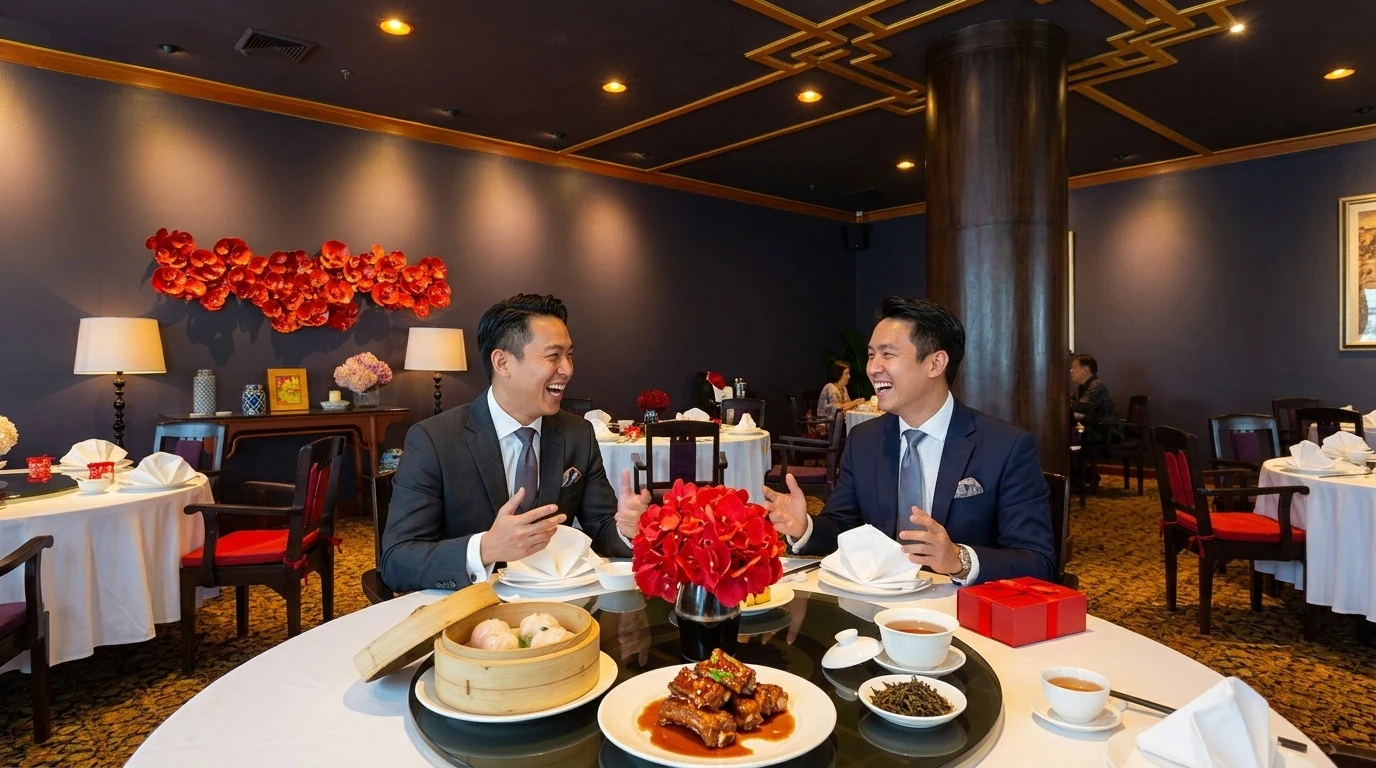
A business lunch in Phuket Town should make conversation easy and leave guests comfortable with the pace of the meal. Yan Long offers Cantonese dining and private-room options for business hosting. Start by telling the restaurant your headcount, arrival time and any firm departure time; then choose a manageable shared menu that supports the meeting rather than competing with it.
In this article
The best plan depends on the purpose of the lunch. Welcoming a new client, catching up with colleagues and discussing a detailed proposal call for different levels of privacy and structure.
Decide what the lunch needs to achieve
For a first meeting, a relaxed introduction may matter more than covering a long agenda. For an established relationship, you may want enough time to discuss a specific decision. Make that distinction before selecting a room or planning several courses.
A lunch table is not automatically a presentation space. If you need screens, documents, audio equipment or a confidential discussion, explain those requirements and ask what can be accommodated. Do not assume that a private dining room includes meeting technology or sound isolation.
Keep the essential business points short enough to fit naturally around food and conversation. If the discussion needs sustained concentration, consider whether it should take place before or after the meal instead of trying to turn every course into working time.
Give the restaurant a realistic time brief
Tell the team when guests will arrive and when they need to leave. A fixed departure for an airport transfer or another appointment should be part of the initial enquiry, not a request made after ordering. Ask which dishes and service arrangement suit the time available.
For dim sum, check the specific service window. Yan Long's official dining information lists dim sum from 11 a.m. to 2 p.m. A reservation later in the day should not rely on that selection being available. Our dim sum lunch guide explains how to plan around it.
- Provide one confirmed arrival time for the party.
- Mention any non-negotiable finish time.
- Ask whether choosing some dishes in advance would help.
- Allow space for guests to settle, order drinks and finish comfortably.
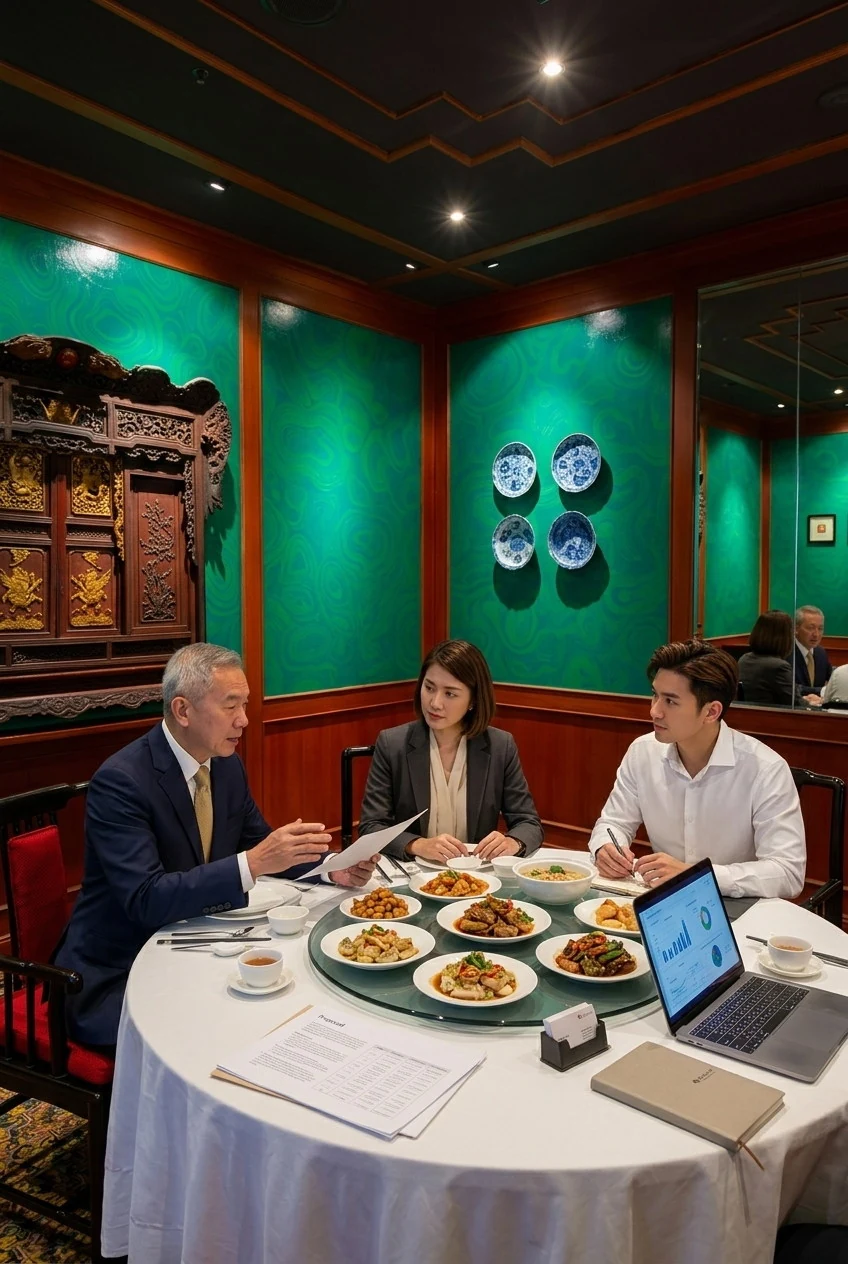
Choose food that keeps the table at ease
A shared menu can be welcoming because guests have something easy to discuss. Keep it varied without making it difficult to navigate. A small range of clearly explained dishes often works better than a crowded table where nobody knows which platter to pass next.
Ask guests about allergies and ingredients they avoid before ordering. For a new client, offer the question neutrally rather than guessing from their background. Let them decline a dish without making it a topic of conversation.
Consider the practical side of eating while talking. Some guests enjoy whole fish and hands-on dishes; others prefer simpler portions at a working lunch. The restaurant can advise on preparation and serving. Choose with the people in mind rather than assuming a more expensive or elaborate dish is always a better welcome.
Use a signature dish with purpose
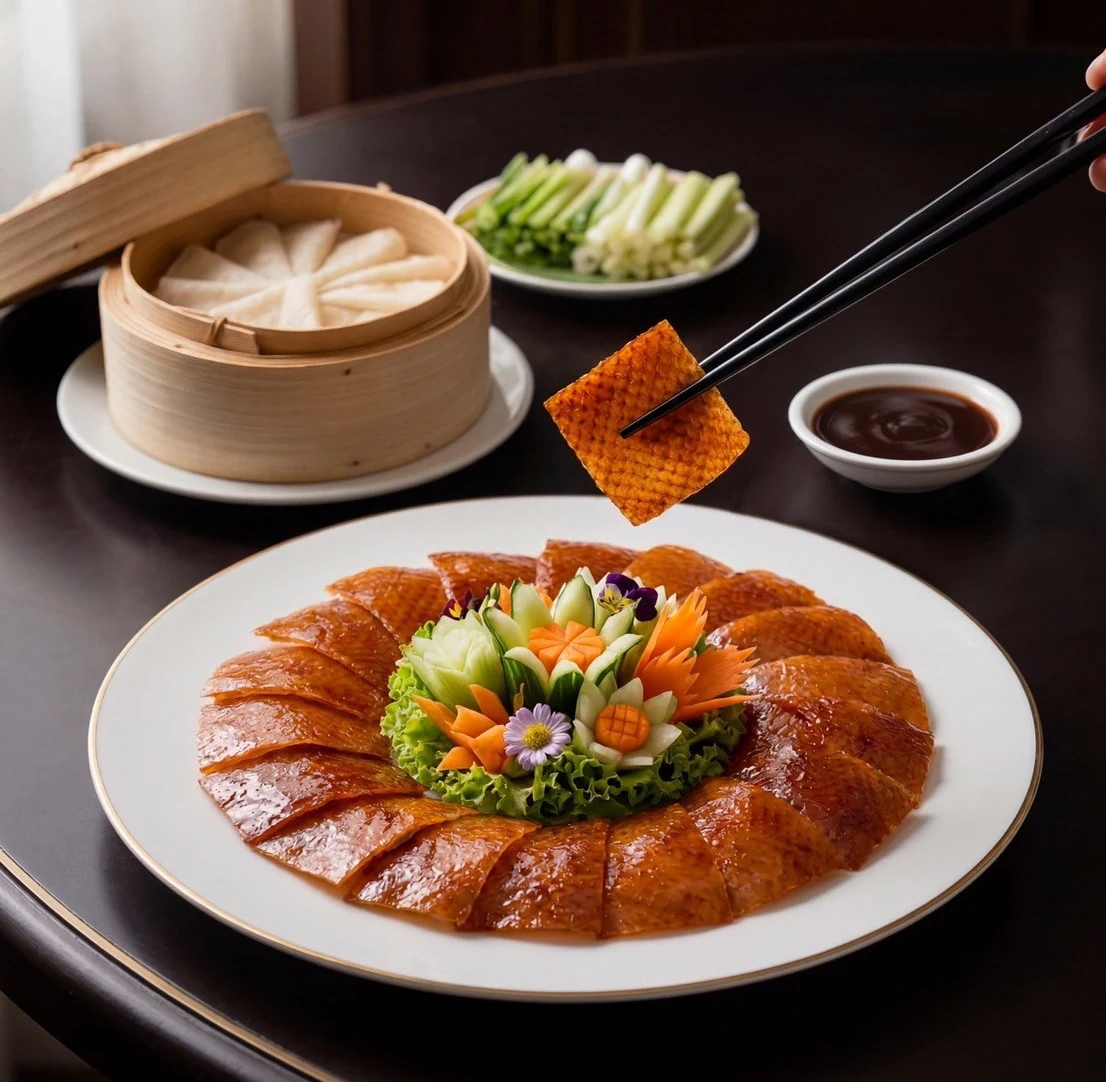
Peking duck can give a hosted lunch a memorable focus, especially when guests are interested in Chinese cuisine. It also deserves time and attention. Ask about the available serving and how it would fit into the meal before adding it to an already extensive order.
For a shorter lunch, a compact selection from the current menu may be more suitable. For a leisurely client meal, a signature centerpiece with contrasting vegetables and accompaniments can create a fuller occasion. Neither approach is inherently more professional; the right choice respects the schedule and appetite of the group.
Use our signature-dish guide to prepare questions, then let current availability and the team's portion advice shape the final order.
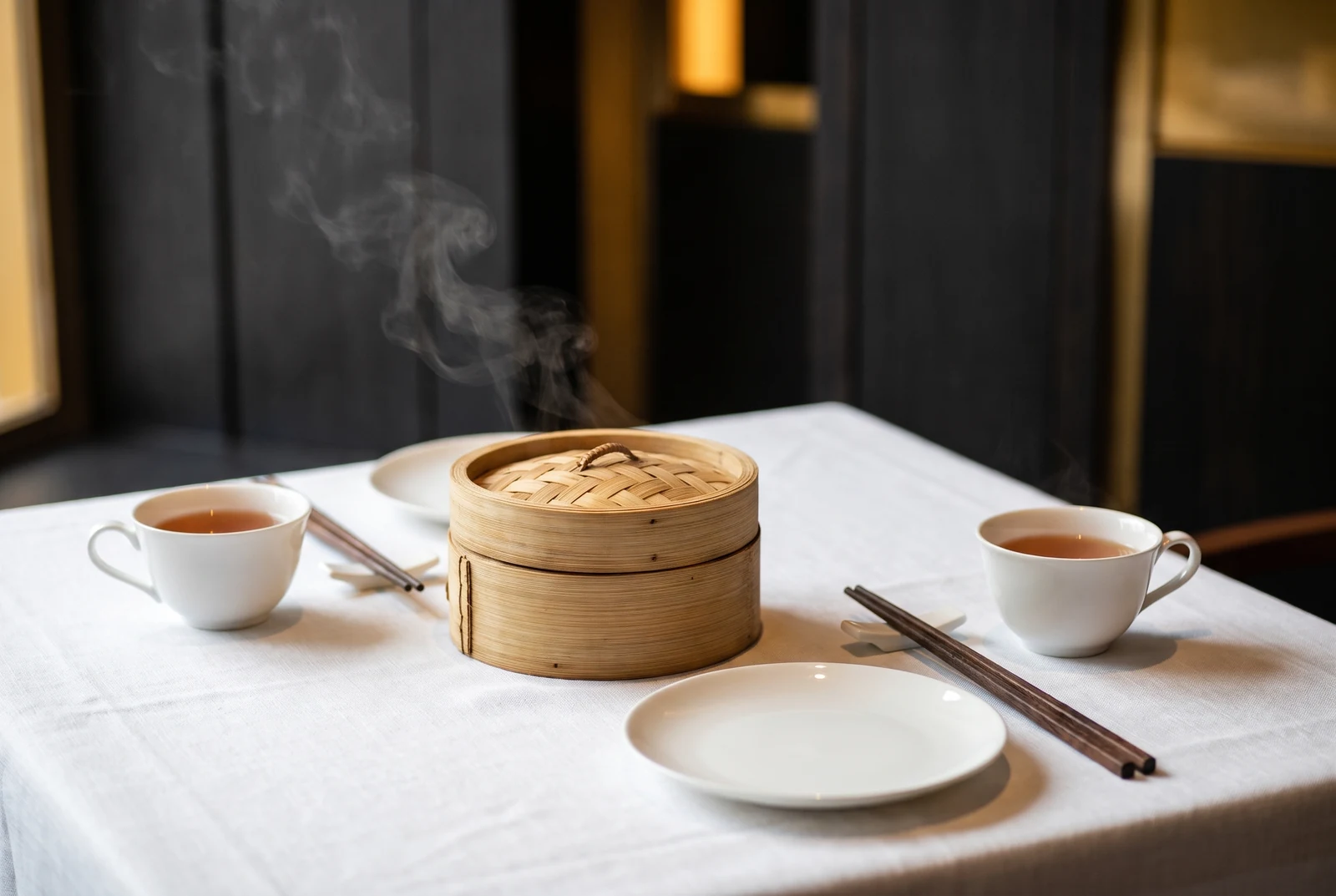
Choose between a regular table and a private room
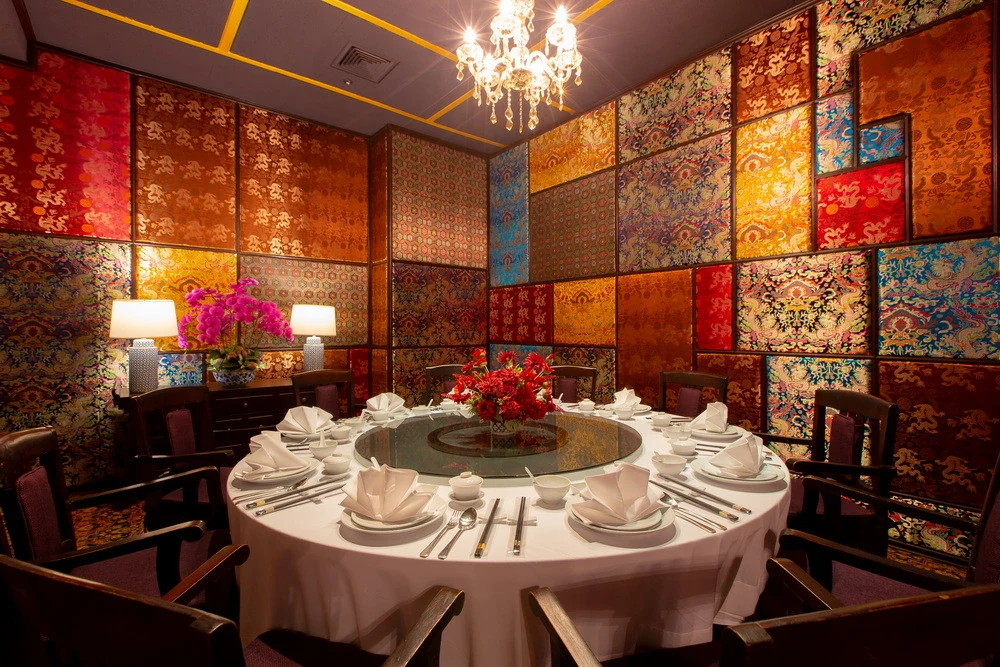
A regular restaurant table can suit a conversational lunch where the atmosphere is part of the experience. A private room may be preferable when the group needs to stay together or minimise interruptions. Check availability and explain the purpose before making the booking.
| Hosting need | What to discuss |
|---|---|
| A small introduction | A comfortable table and a modest shared menu |
| A focused group discussion | Private-room availability and the expected level of privacy |
| A client celebration | A signature dish and enough time for a relaxed meal |
| A strict schedule | Dish choices and a service plan the team can confirm |
If you choose a room, confirm the current minimum spend, any separate charges and the agreed room-use period. Our private dining planning guide provides a fuller checklist.
Handle the host's details quietly
Decide who will pay and how the bill should be presented before the end of lunch. If your organisation needs particular invoice information, ask the restaurant what details it requires and what documentation it can provide. Avoid promising a payment or invoicing arrangement before it has been confirmed.
Share clear arrival instructions with guests: Yan Long is on the first floor of Royal Phuket City Hotel on Phang-Nga Road. If somebody needs assistance reaching the table, discuss it in advance. An easy arrival sets a more useful tone than an elaborate welcome after a confusing journey.
At the table, leave guests room to enjoy the food. A short explanation of the dishes can start conversation, but there is no need to narrate every detail or insist that everybody try everything.
Business lunch questions
Can I arrange the menu before guests arrive?
Ask the restaurant about advance menu planning when you enquire. Confirm the dishes, quantities and any dietary arrangements directly; an online table request alone does not establish a pre-ordered menu.
Is a private room necessary?
Not for every business meal. Choose according to the conversation, group size and level of privacy needed. If confidentiality is essential, ask specific questions rather than relying on the room label.
How do I begin?
Send a lunch request with the number of guests, preferred time and any firm finish time. Add dietary needs and whether you want a private room. Those practical details give the team a useful basis for a well-paced hosted meal.