Dining guides
How to Share a Chinese Meal Around a Lazy Susan
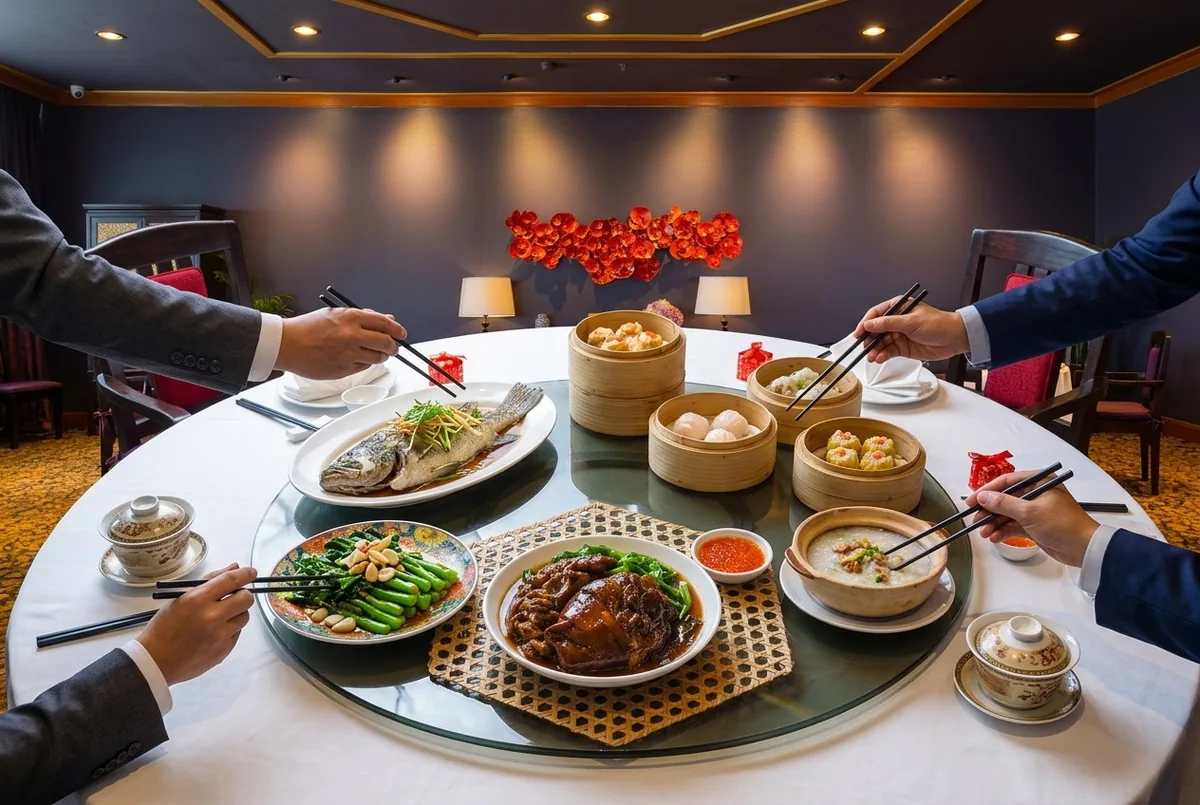
A turning centre makes a shared meal easier: dishes come to you, and everyone can try a little without reaching across the table. The small challenge is timing. At a Chinese meal, a few considerate habits keep the lazy Susan useful, protect the space around it and let the conversation carry on. You do not need to memorize a ceremony to enjoy dinner at Yan Long.
In this article
Pause before you turn
Before moving the centre, look around the table. Someone may be lifting a piece of fish, pouring sauce or resting a serving spoon against a dish. Wait until their hands and utensils are clear, then rotate slowly. A quick “May I turn this?” works well when you cannot see what is happening on the other side.
Bring the dish within comfortable reach and stop the turntable before serving. Avoid trying to chase a moving platter with chopsticks. If two people reach for different dishes at once, let one finish first. There is no need to settle the moment with a complicated rule about who should go next; a brief pause usually solves it.
Keep the edge clear
The turning surface needs a little space around it. Keep your glass, tea cup, phone and personal bowl on the fixed part of the table, far enough back that a passing platter will not catch them. Watch for handles and serving spoons extending beyond a dish. They need clearance too.
When a large platter arrives
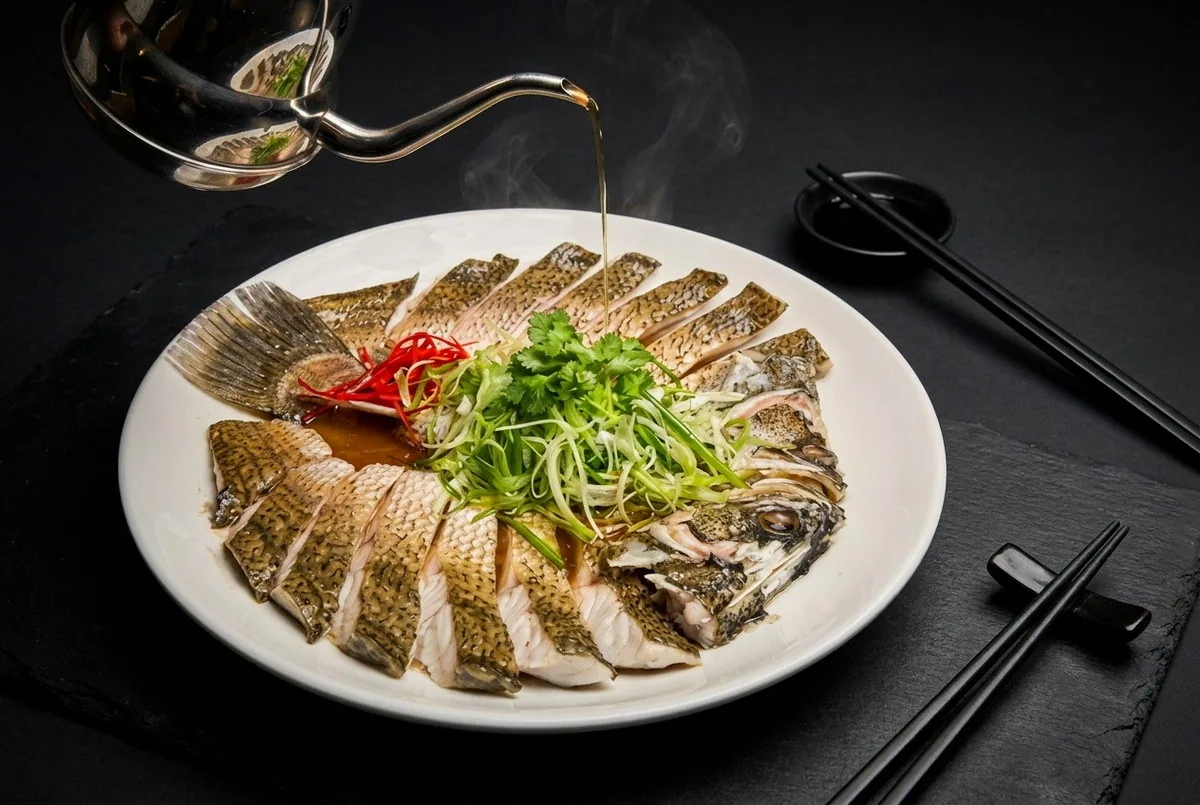
Let the team place it before anyone turns the centre. A large fish plate or several bamboo steamers can change how much room remains. If the table feels crowded, ask for help rearranging it. Moving a heavy dish while other guests are serving themselves makes a simple problem harder.
Leave serving utensils with their own dishes where possible. That helps the next diner find what they need and keeps sauces from mixing unintentionally. If a dish needs a different spoon or a pair of serving chopsticks, ask for one rather than improvising with a utensil that is difficult to handle.
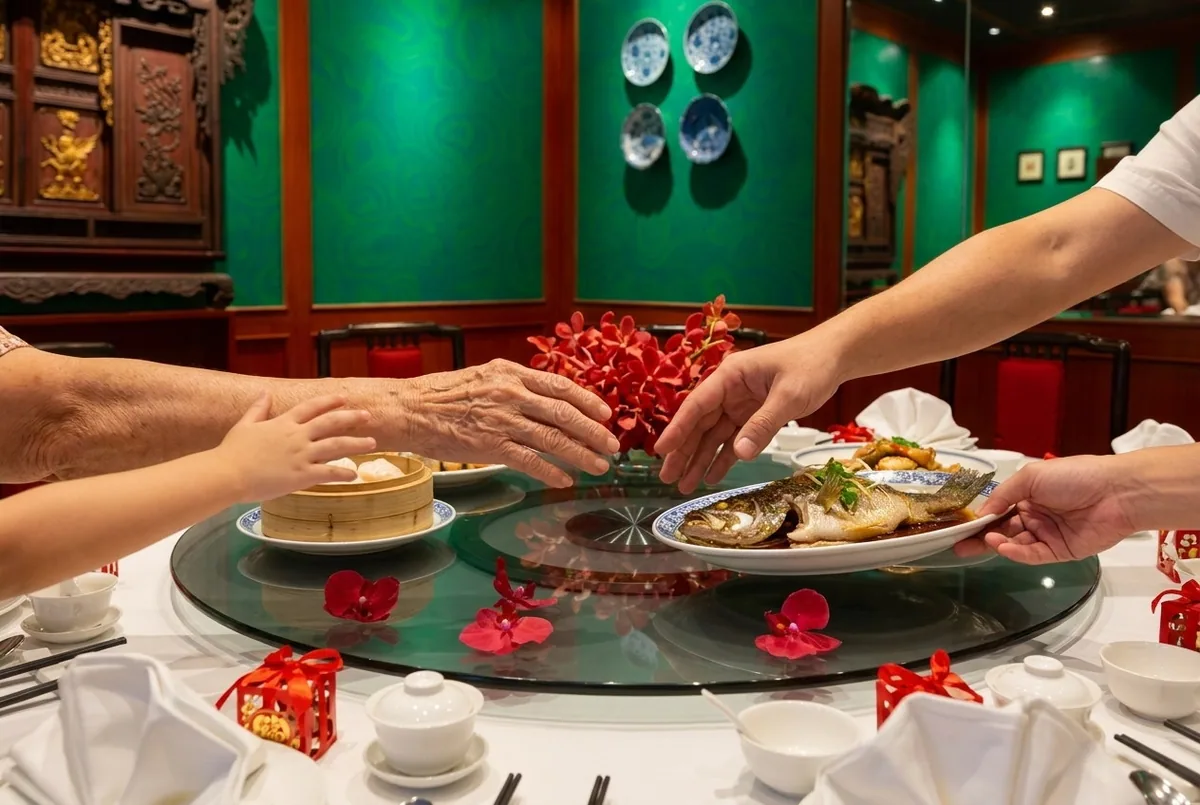
Serve a little, then pass the dish on
Taking a small first helping gives everyone a chance to try the shared food. You can return to a favourite once the table has had a turn. This is especially useful when a platter contains a limited number of pieces or when guests are still deciding what they enjoy.
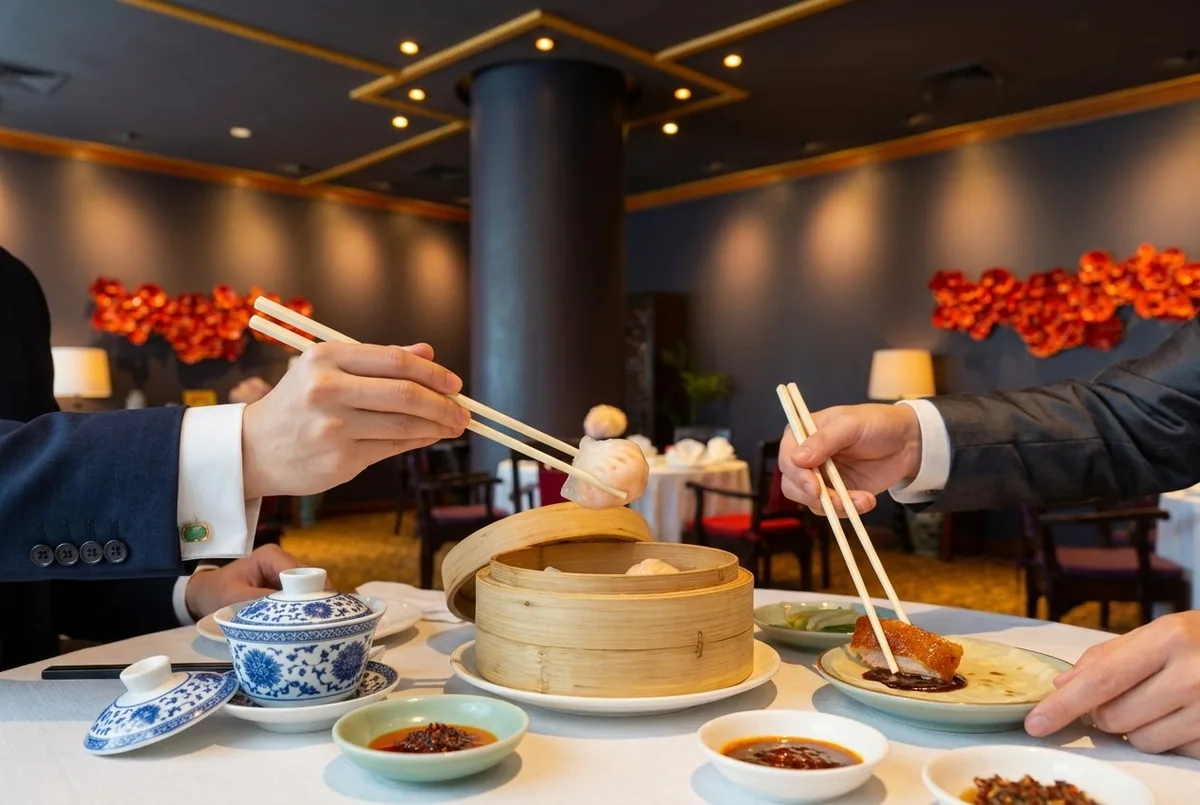
Move food to your own bowl or plate before eating. Use the provided serving utensils, and ask the team if you are unsure which utensil belongs with a dish. Choose a piece without repeatedly moving the rest of the food around. If a piece is difficult to lift, steady the serving utensil and take your time rather than reaching farther across the table.
Chopsticks are useful; comfort matters too
Use the cutlery that lets you eat comfortably. If chopsticks are unfamiliar, ask for a fork or spoon. A shared meal works best when guests can concentrate on the food and one another, rather than worrying about dropping something. For slippery or delicate food, a serving spoon can be easier than trying to grip a large portion.
When you pause, place your chopsticks securely on the rest or alongside your plate. Keep them out of the path of the turning centre. Use a few words to indicate a dish instead of pointing across the table with a utensil in your hand.
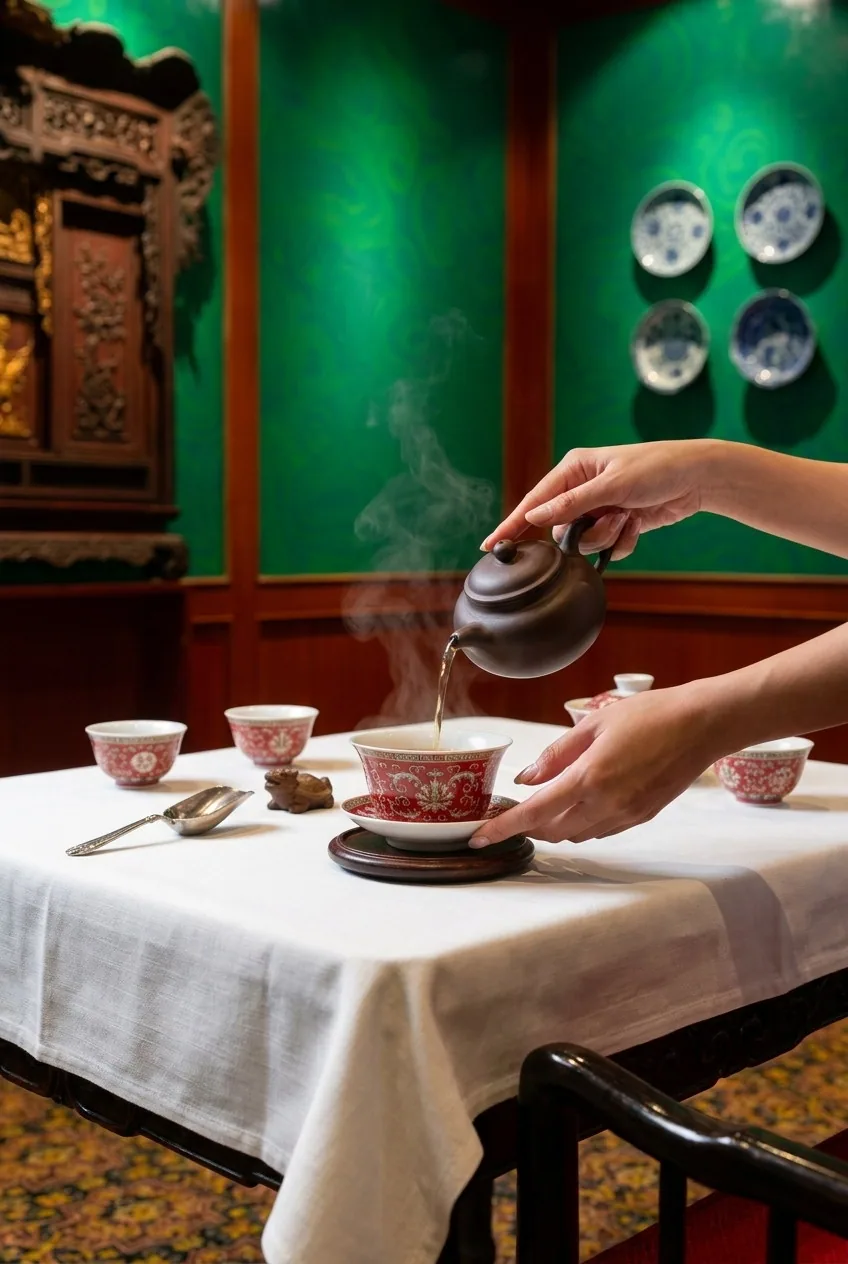
Tea needs the same small pause
Before pouring, make sure the cup is stable and the table centre has stopped. Ask whether the other person would like more, leave space in the cup, and set the pot down securely. If the pot is heavy or hot, ask the team to help. You do not need to lift it across several dishes to reach someone.
Guests may have different habits around tea and table service. Follow your host’s lead where that helps, but keep the practical aim in view: make the next person comfortable. This guide offers useful shared-table habits, rather than a claim that every Chinese family or restaurant follows one identical set of customs.
Make room for different appetites and needs
Ask what each person wants to try before deciding that everyone needs an equal portion of every dish. Some guests may prefer rice and a few familiar choices; others may want to taste across the order. A short conversation avoids serving someone food they did not want.
Raise ingredient questions with the restaurant before dishes arrive. If a guest has a restriction, confirm the ingredients and preparation with the team rather than relying on another diner’s guess. Serving utensils and separate plates can help organize the table, but they do not establish that a preparation is suitable for a particular restriction.
For guests who find reaching or turning difficult, offer to bring a dish closer or ask the team for assistance. Children may need help judging when it is safe to turn the centre. Keep hot vessels away from the edge, and let adults or staff handle items that are awkward to lift.
Use these habits at your Yan Long table
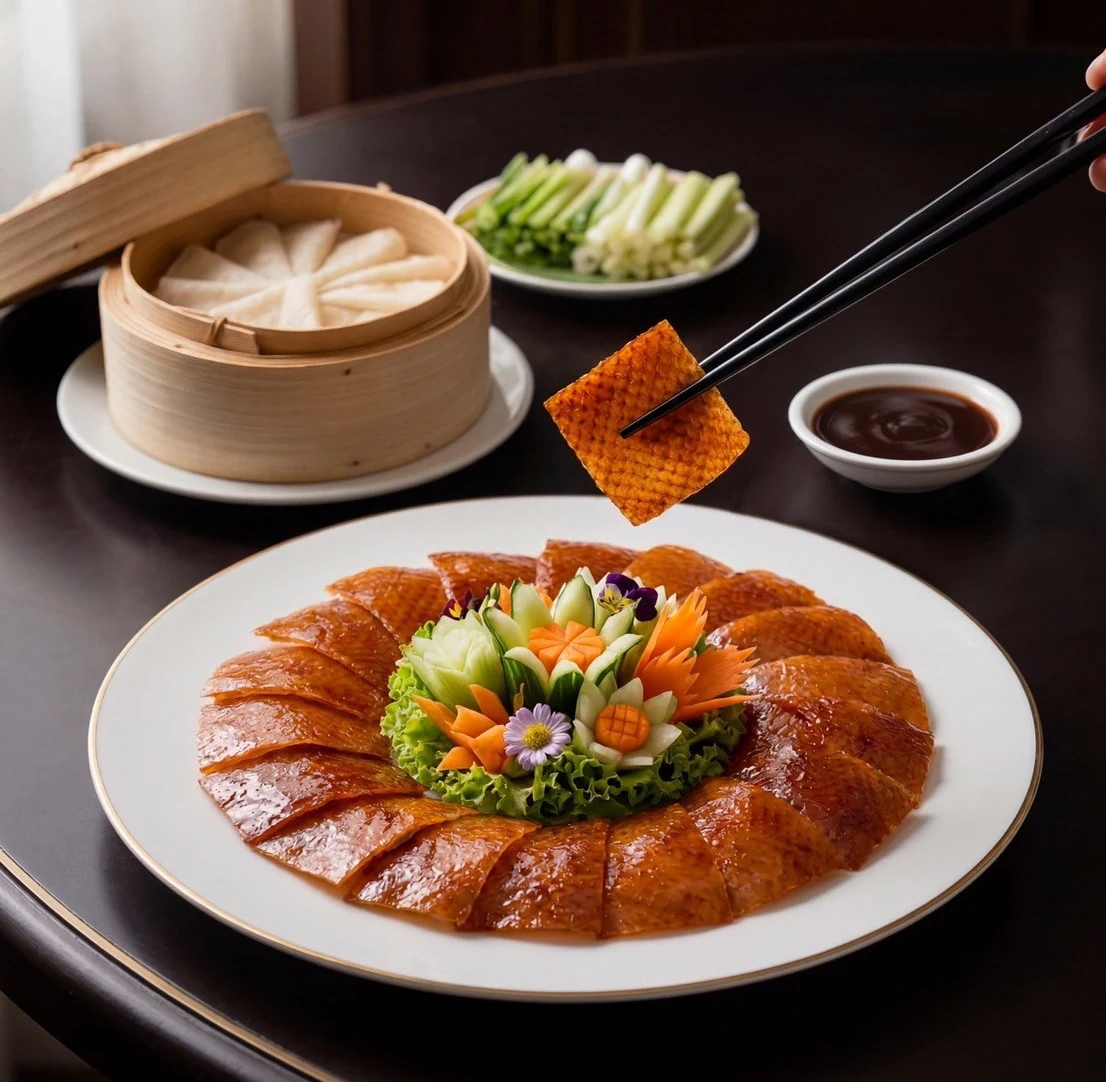
Yan Long is on the first floor of Royal Phuket City Hotel in Phuket Old Town. Its menu selection provides a starting point for shared dining, from dim sum to larger dishes. Ask the team how the particular dishes you choose are best served; a steamer, a whole fish and a platter of sliced meat need different handling.
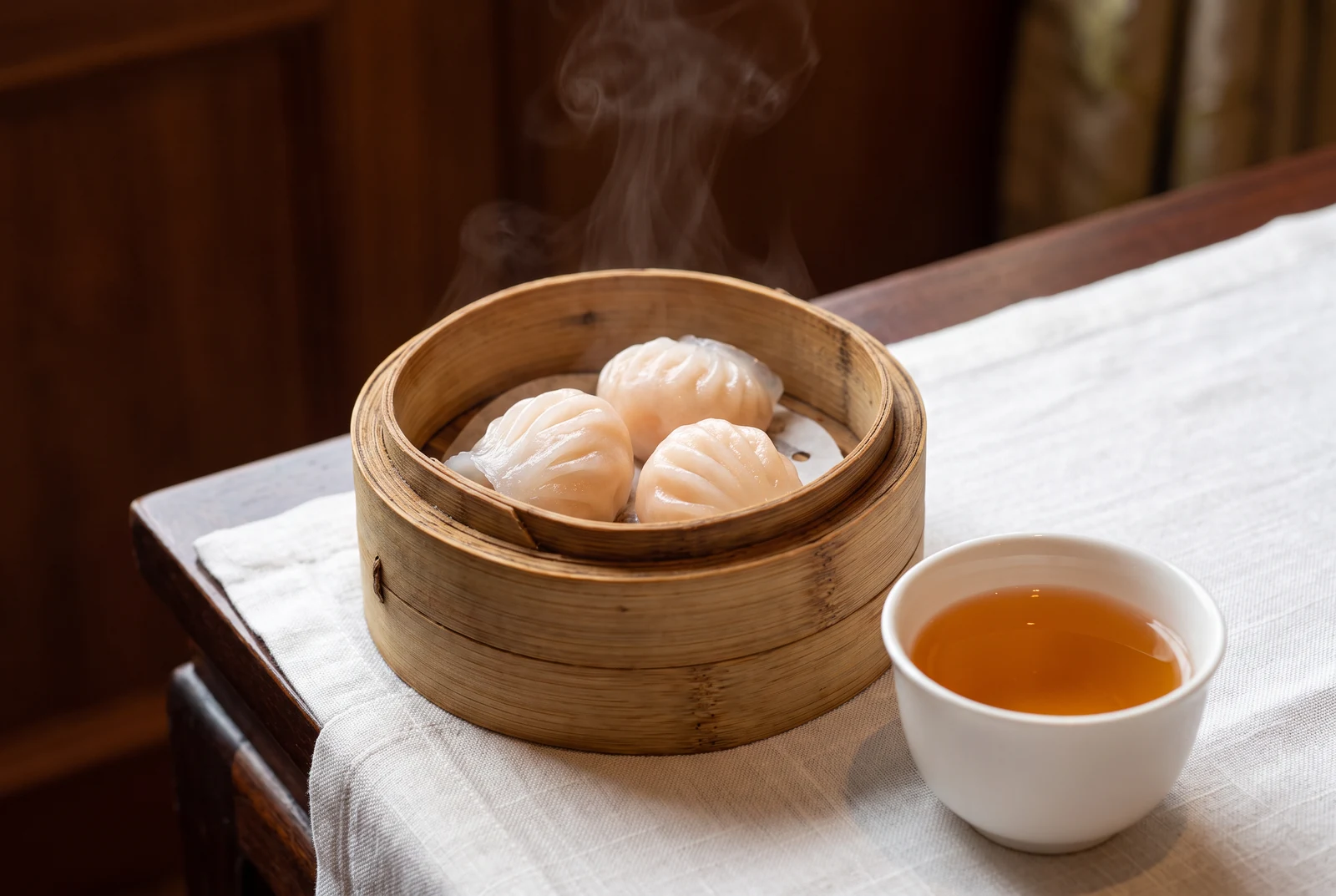
For the food side of the visit, the dim sum lunch guide explains another way to build a meal around shared plates. If you are organizing a group, check the dining rooms and mention your guest count and seating needs when you request a table. Confirm the actual table arrangement with the restaurant.
Once everyone is seated, keep it simple: look before turning, give the next person room, and ask when something is unclear. Those small choices do more for a relaxed meal than trying to perform every gesture perfectly.